| European
Cruise Council 2009 Conference
Closing statement
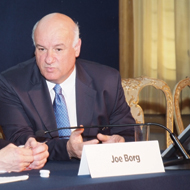
Commissioner Joe Borg
European Maritime Day, Rome
19 May 2009
European cruise industry: a vital contributor to
the European economy
Ladies
and Gentlemen,
I
am pleased to be addressing your annual conference during European
Maritime Day 2009. This is, of course, more than a happy coincidence.
It proves that the cruise industry has embraced the guiding principles
of the EU's Integrated Maritime Policy, devised in response to
the needs of maritime stakeholders such as you.
The
Integrated Maritime Policy and the cruise industry alike can only
succeed if they tackle opportunities and challenges in an integrated,
cross-sectoral way.
Today's
cruise lines are pushing the boundaries of technology. For this
they depend on competent partners in the leading European shipyards,
which in turn seek innovation-based partnerships in the marine
equipment industry. Cruise lines are thus profiting from the focus
on knowledge and innovation which European shipbuilders and the
Commission have developed together under the LeaderSHIP 2015 initiative.
Cruising
is part of the tourism industry, but it also remains a genuine
shipping activity. So it must comply with the full regulatory
framework for maritime transport, while delivering an enjoyable
on-board experience to its clientele.
The
cruise industry is doing this very successfully and continuing
to display healthy growth the length and breadth of Europe. Europe's
impressive coast, river and seascapes, unrivalled cultural wealth
and fascinating varieties of lifestyles make it a genuine maritime
continent. Moreover, they help make cruising and Europe a natural
match – a fact recognised by Europeans and non-Europeans
alike. A quarter of the cruise passengers embarking in European
ports are not from Europe, which shows how attractive Europe is
as a cruise destination.
So today we can proudly champion the importance of cruising to
Europe's maritime activities. It provides work for our shipyards
and marine equipment producers, employment in ports, coastal communities
and the wider regions, and valuable economic benefits all around.
Our
study into tourist facilities in ports has revealed the wide-ranging
economic benefits of cruise industry activities. We need to build
on this and remove remaining obstacles in order to integrate cruising
with regional tourism in the best possible way. This is one challenge
we are facing.
Other
challenges include environmental protection and reconciling the
interests of the various users of the maritime space. This is
especially true of the Mediterranean, a prime destination for
cruise tourism, where further efforts are required to ensure that,
while cruise tourism grows, environmental impacts are kept to
a minimum.
Cruise
ship tourism in polar waters is another issue we must address.
While the reasonable growth and diversification of economic activities
in these remote regions of the planet is to be welcomed, it also
brings challenges.
Binding
international requirements for cruise ships navigating in polar
waters are not yet in place. Moreover, as cruise vessel traffic
in the polar regions increases, surveillance and rescue infrastructure,
along with passenger safety needs, have become a growing concern.
Encouraging
developments are underway here – not least the work of the
Cruise Ship Safety Forum and the environmental and safety guidelines
adopted unilaterally by many cruise ship companies operating in
the polar regions.
But
we must do more. We need to pursue our work on the relevant IMO
guidelines. And we would urge cruise ship operators to pre-empt
any general standards and to develop and share best practice.
Good regulation is an asset, because it provides planning security
for economic operators. It can also establish best practice around
the world, especially on the environmental front. The Integrated
Maritime Policy contains a number of tools of relevance here,
of which I will mention just three.
Firstly,
the promotion of shore-side electricity is an effective way to
tackle local pollution concerns. I am optimistic that we will
soon get the required impetus for investments to make shore-side
electricity a reality in many ports, including in neighbouring
countries in the southern Mediterranean. The Commission will address
the issue of taxation, and the relevant standardisation bodies
are close to an agreed standard for the ship-to-shore connections.
This is not about imposing a technological option, but rather
about moving forward on a very particular problem facing the cruise
industry.
Secondly, maritime spatial planning helps public authorities and
stakeholders coordinate their actions and thus optimises the use
of marine spaces to benefit both economic development and the
environment. Cruising needs state-of-the-art port facilities and
it derives a huge profit from unspoilt natural sites. Maritime
spatial planning is, therefore, of great importance to the cruise
industry.
Thirdly,
the current economic crisis also provides an opportunity for Europe
to deploy its world-leading innovative capabilities to emerge
after the downturn with new class of environmentally friendly
ships. The Commission is therefore exploring the possibility of
launching a "Clean ship" initiative. I would like to
invite all of you to consider your possible involvement in such
an initiative which aims at implementing new technologies to dramatically
increase the environmental performance of all shipping activities,
including of course also cruising.
These
are just three examples of policy action that have come out of
our Integrated Maritime Policy – a policy aimed at delivering
concrete benefits to all stakeholders.
I
would like to express my gratitude to the cruise industry for
having worked with the Commission so productively in developing
the European Integrated Maritime Policy.
This
event is further evidence that we have found a good way of working
together. I am confident that the cruise industry will continue
to thrive, especially in Europe's waters, and will thus play a
valuable part in Europe's economic recovery.
Thank
you. |